
What is Management Accounting And why is it important for your growing business?
Running a growing business without proper financial visibility is like driving without a dashboard. You’re moving around, but you don’t know how fast you’re going, how far you’ve gone, or when something may go wrong.
That’s where management and reporting services come in handy. Management accounting differs from bookkeeping in that it provides the business owner with the financial information he or she requires to make informed decisions with confidence. Whether it’s cash flow forecasting or profit analysis, it transforms numbers into actionable strategies.
Your Bookkeeper Tells You What Happened. A Management Accountant Tells You What’s Next.
Budgeting, forecasting, performance metrics — learn why management accounting is the secret weapon every growing business needs to scale smarter.
What Management Accounting Actually Means for Business Owners
Management accounting involves gathering, analyzing, and reporting financial information to support management decision-making. It’s not about tax filing or meeting compliance standards; it’s about providing leadership with a clear view of the business’s position and direction.
This area of study includes budgeting, cost analysis, performance monitoring, and financial forecasting. Outsourced bookkeeping services focus on transactional data, whereas management accounting delves deeper into the data to inform business decisions and actions. This is important for a business that is expanding.
How Management Accounting Differs from Standard Bookkeeping
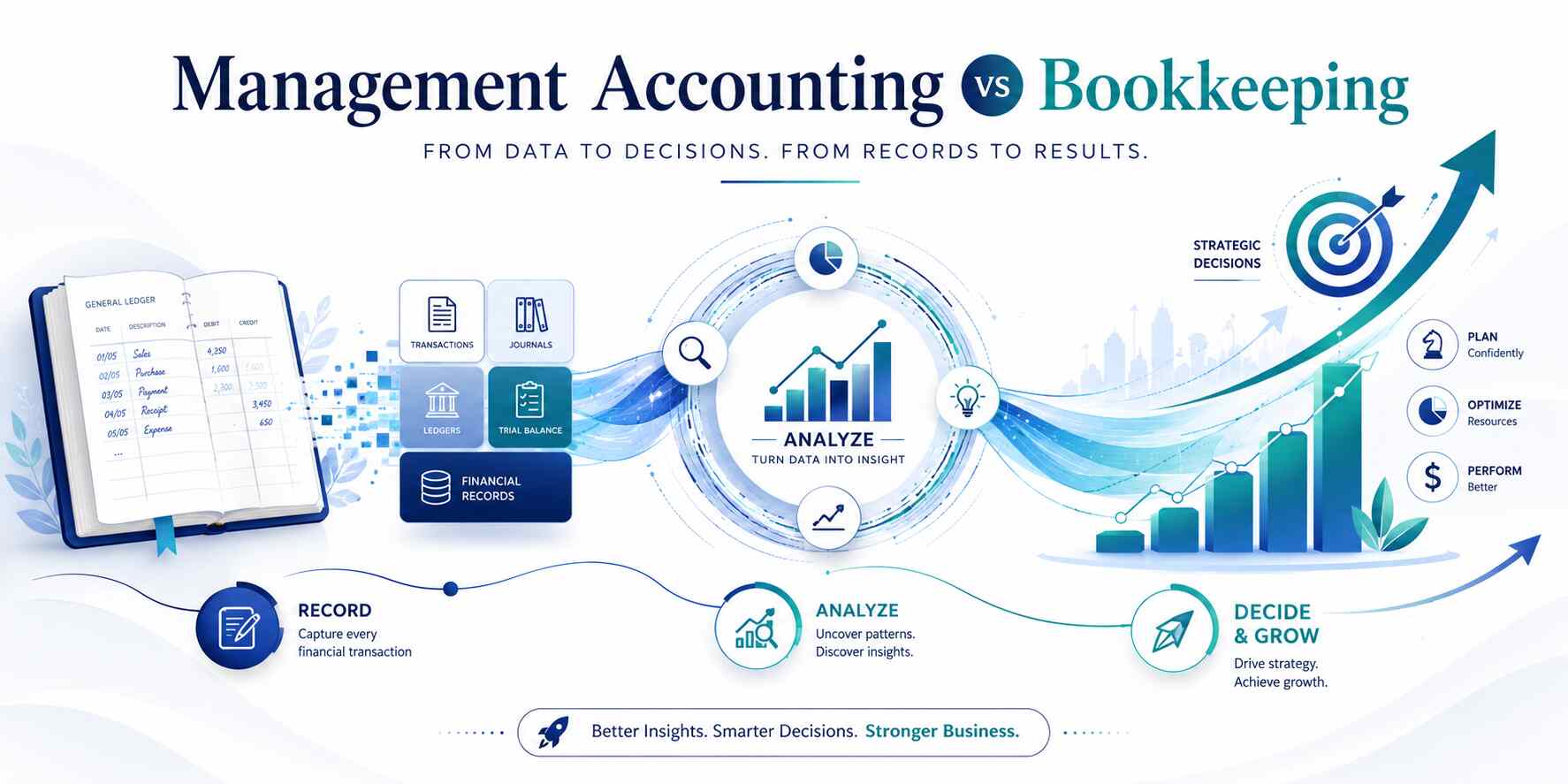
Many business owners think it is sufficient to have clean books. In practice, bookkeeping documents past events, and management accounting forecasts and forecasts future events. The two are for different purposes, and both are essential.
Imagine a company that uses outsourced bookkeeping services to record its monthly expenditures, but it doesn’t know what is being spent, which product line is costing them money, or which customer group is making them money. That’s the analytical layer that makes businesses react and not plan.
Key Areas Where Management Accounting Creates Real Value
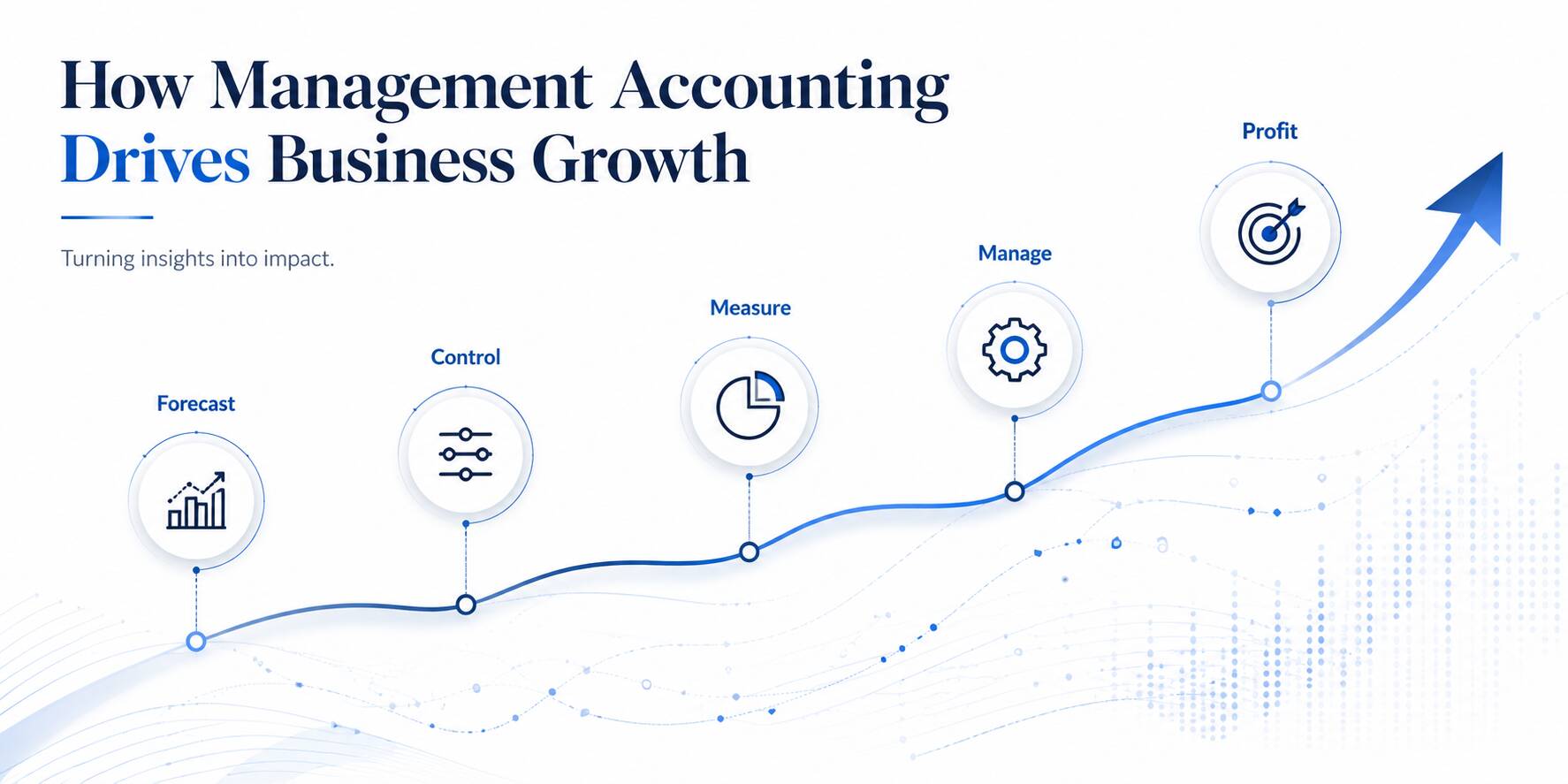
Management accounting has a wide scope of application in business. It gives you the financial backbone to make smarter hiring decisions, more effective pricing strategies, and more accurate growth projections. Even the best-managed businesses can be left with costly assumptions if they don’t have it.
It has the following key areas of measurable impact:
- Budgeting and forecasting – realistic financial goals based on past trends
- Cost control – finding out where the money is going in the departments or service lines.
- Performance reporting – regularly reporting actual results against planned targets
- Cash flow management is one of the most important parts of the business, as it ensures that the business does not run out of money at critical times.
- Profitability analysis – knowing what products, clients, or locations are the most profitable
Companies such as The Accounting Express include management reporting in their client service model, so that business owners can get a digestible summary of their finances rather than raw data they can’t use.
The Role of Tax Strategy in Management Accounting
Management accounting is not a standalone process that is separate from tax planning. Indeed, an effective tax strategy for business owners can be structured on top of the year-round management accounting advice.
With accurate, up-to-date management reports, advisors can be aware of deductions earlier, make strategic major purchases, and prevent year-end surprises. Business tax preparation services and ongoing management reporting provide financial benefits year-round, not just once a year.
Research by Harvard Business Review reveals that companies with robust internal financial reporting systems make much more effective capital allocation decisions, highlighting the strategic nature of management accounting, rather than simply a finance function.
Stop Making Decisions in the Dark — Management Accounting Lights the Way
Financial statements tell you where you’ve been. Management accounting tells you where to go. Discover how to use data to drive real business growth.
Why Growing Businesses Cannot Afford to Skip It
Management accounting is frequently not seen as a revenue generator for small and mid-sized businesses, which is why they are hesitant to invest in it. This perception comes at a price. As a business expands, the complexity of its finances often increases faster than the business owner can keep up with, and decisions not based on data are more costly.
Understanding bookkeeping costs for small businesses is a good start, but the benefits of management reporting grow with time.
A business that understands its gross margin by service line, monitors labor costs weekly, and has a cash flow forecast three months in advance will always outperform a business that is blind to its gross margin by service line and only checks its bank statements monthly.
| Financial Function | Basic Bookkeeping | Management Accounting |
| Records transactions | Yes | Yes |
| Produces tax-ready reports | Yes | Yes |
| Tracks performance vs budget | No | Yes |
| Forecasts future cash flow | No | Yes |
| Guides pricing decisions | No | Yes |
| Identifies unprofitable areas | No | Yes |
Specialized Industries Are Even Better Off
Some industries are particularly complex financially, and management accounting can be especially useful in this regard. A contractor or service business, for instance, has fluctuating labor expenses, seasonal ups and downs in revenue and profitability based on projects, and a simple income statement isn’t enough to run it effectively.
That’s why there’s guidance on how an HVAC accounting expert can transform your business that you would never be able to make with a generic report. Likewise, companies responsible for outsourcing payroll services and project expenditures must have integrated reporting to gain a real-time view of their net position.
The Association of Chartered Certified Accountants has noted that management accounting is gaining greater acceptance as a key enabler of sustainable business performance across all industries.
Conclusion
It is not only large companies that can afford management accounting; it’s also a practical need for any company that wants to grow. It informs business owners of real profitability and helps them to create more effective tax plans.
Regardless of the service provider used, good management and reporting services are among the most obvious ways to achieve sustainable, informed growth. Businesses that will survive in the long term are the ones that don’t guess and measure.
Tax Accounting Is Mandatory. Management Accounting Is Profitable.
One keeps you compliant. The other keeps you competitive. See why forward-thinking businesses invest in management accounting — and why you should too.

- All Posts
- Accounting And Finance
- All Blogs