

Texas Franchise Tax Starts With Clean Books: What Business Owners Should Organize Early
Texas business owners claim to collect numbers that they ought to have had months before, in May. The Texas Comptroller has a strict deadline of May 15 for franchise tax reports.
The companies that get through the day without any stress are among those that make record-keeping a habit. This is where Texas Bookkeeping Services is valuable.
The key to making a smooth filing rather than a problem in the form of penalties and expenses is to get organized early.
The Texas Comptroller of Public Accounts says that even if no tax is due, a $50 fine will be imposed for any report filed after the deadline.
Texas Franchise Tax Season Is Coming — Are Your Books Ready?
Don’t wait until the deadline to discover missing receipts or messy records. Get your books organized early and avoid costly penalties and stress.
Why Franchise Tax Season Begins With Bookkeeping
The federal return is the basis for the franchise tax calculation. All income, deductions, and payroll amounts must be correct by the time the report is due.
Companies that do it in the spring can find that there are unfilled spaces and missing receipts or expenses that have not been categorized or mismatched payrolls. Having well-structured and organized franchise tax records in Texas eliminates that fear.
Texas has four ways of calculating margins, and the smallest margin is used. Tax-ready bookkeeping is virtually impossible to run all four of them accurately, and owners can often find themselves paying too much in taxes.
What the Comptroller Requires Each Year
No franchise tax is a straight money charge. It is based on the entity type, revenue level, and reporting method.
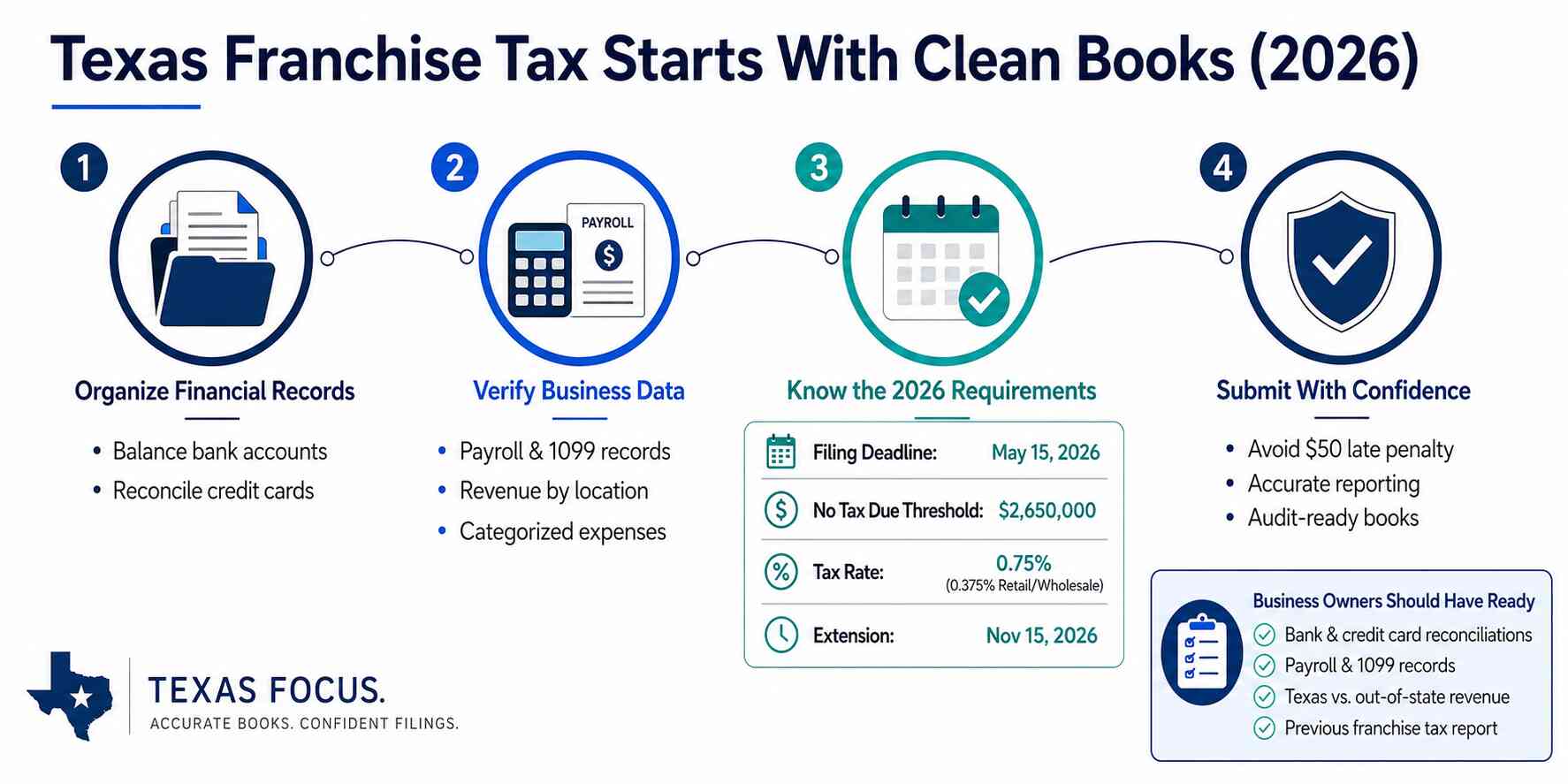
Key 2026 Figures
The table below lists the numbers business owners should have on hand.
| Item | 2026 Detail |
| Filing deadline | May 15, 2026 |
| No tax due threshold | $2,650,000 |
| Standard tax rate | 0.75% (0.375% retail/wholesale) |
| Late filing penalty | $50, even if no tax is owed |
| Extended deadline | November 15, 2026 |
If the entity is below the threshold, then it is not liable for tax but is required to submit a Public Information Report. This will still incur the $50 penalty, hence the importance of clean books for taxes all year round.
Business owners should have the following on hand:
- Bank and credit card statements are balanced monthly.
- Payroll records and 1099 contractor payments
- Revenue per Texas vs out-of-state activity
- Prior year franchise tax report for comparison
Building a System That Keeps Pace With Compliance
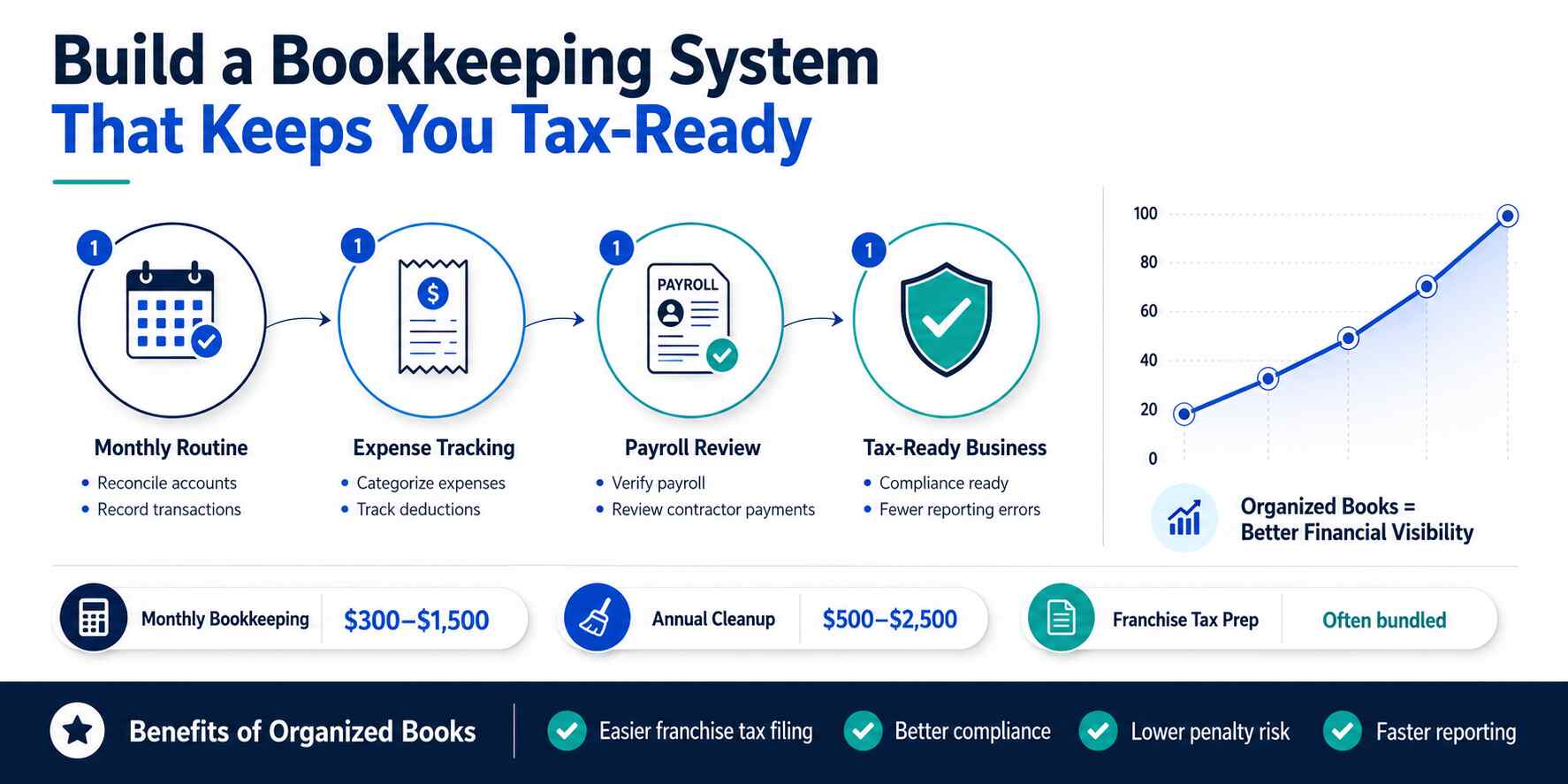
A good bookkeeping system is not established in April. It’s a result of the daily routines we do each month: balancing accounts, sorting through expenses, reviewing payroll deductions.
Business tax compliance support is something a business owner will rely on heavily when outsourcing, and it can also prevent many errors.
Business owners can get assistance at any time of the year to keep their books audit-ready from firms like The Accounting Express. This means that there will be less of a shock and fewer possible penalties for incorrect reporting.
Texas Business Owners — Clean Books Save You Thousands on Franchise Tax
Disorganized records mean overpaying taxes and missed deductions. Learn exactly what to organize before filing season hits your Lone Star business.
What Small Business Owners Typically Pay
Cost is typically the primary consideration for the owner. The price is dependent on transaction volume and scope:
- Monthly bookkeeping packages: $300–$1,500
- One-time annual cleanup: $500–$2,500
- Franchise tax prep: frequently packaged at a lower price
It’s good to know the small business tax preparation costs in advance, so owners can budget accordingly.
Where Business Owners Turn for Support
The need for organized books is not unique to Texas; franchise tax is. When looking for a professional bookkeeping company in USA, owners want one that knows federal laws and the idiosyncrasies of their own state.
That demand is across the key markets. Owners looking for Expert Bookkeeping Services in Los Angeles, Expert Bookkeeping Services in Florida, Expert Bookkeeping Services in San Francisco, and Expert Bookkeeping Services New York all desire the same: accurate and timely books.
Other business tax preparation in Texas goes hand in hand with franchise tax, such as sales tax and payroll filings. One of the most reliable ways to have a successful tax filing, according to the IRS recordkeeping guidelines, is to keep good records.
Conclusion
Getting franchise tax compliance right in Texas begins in the books, not in the report. Monthly reconciliation and reliance on professional support leave many frustrated every May by late fees.
Don’t Let Texas Franchise Tax Catch You Off Guard — Start Organizing Today
Revenue reporting, expense tracking, and proper classification — get your books in shape early so you file with confidence and keep more profit.

- All Posts
- Accounting And Finance
- All Blogs