

Investor-Ready Books: What San Francisco Startups Should Fix Before Fundraising
Being competitive enough as a raiser in the Bay Area is a challenge without the added distraction of messy financials. Numerous entrepreneurs end up choosing to outsource bookkeeping services in San Francisco because the term sheet stalls when the numbers do not pass investor inspection. It’s no longer a luxury to have clean books; it’s a part of the pitch.
SF Investors Judge Your Books Before They Judge Your Pitch
Messy financials are the #1 reason San Francisco startups get rejected. Fix these key areas before your next investor meeting and close the deal.
Why Investors Judge Startups by Their Books First
Investors have an opinion before any questions are asked in a pitch meeting, based on how the financial data looks. Risk signals occur long before product or team discussions, even if a messy P&L or cap table does not.
That initial impression is why investor-ready bookkeeping San Francisco founders tend to close deals more quickly than teams working to clean up records during diligence.
In addition, Bay Area investors are making larger investments in fewer companies this year, so each investment is being examined more closely. A lot of founders who use MSP bookkeeping services in San Francisco end up ahead of this by reconciling monthly accounts rather than just before they have to raise money.
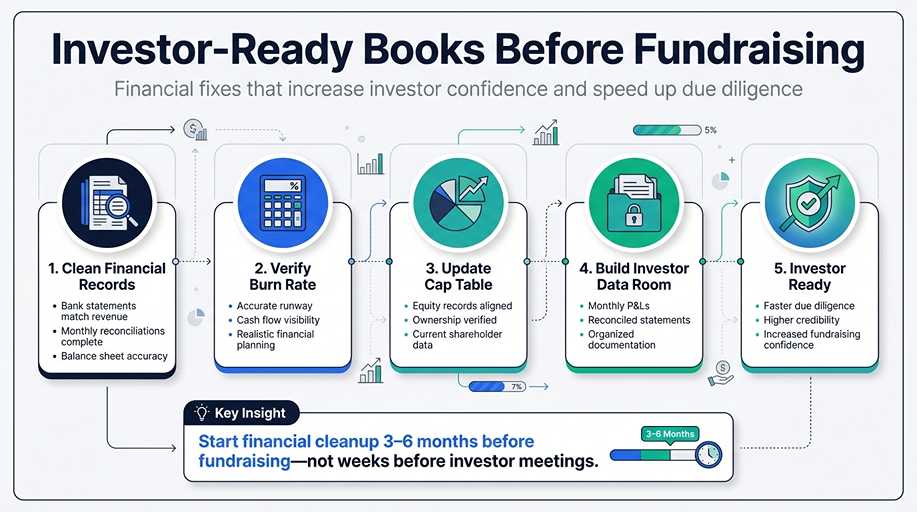
The Financial Moves That Make a Difference Before a Pay Raise
While revenue growth is usually the goal of any founder’s presentation to investors, the financial function is being scrutinized line item by line item. These are the most typical problems that can be avoided with a few months of preparation, and which delay deals:
- Bank statements that do not correspond to the recorded revenue items.
- Unreconciled monthly statements or discrepancies in the accounts.
- Improper burn rate/runway calculations
- A cap table that is not in sync with the actual equity share capitalization records.
Having a team that provides outsourced accounting SF Bay Area support can fill these gaps months before a raise rather than during a mad scramble in the data room.
One of the top red flags investors look for in startups during due diligence is overoptimistic financial projections made without historical data, according to research by Evalyze.ai.
Fundraising in SF? Your Books Must Tell a Story Investors Trust
Clean books build confidence. Learn exactly what San Francisco investors look for — from revenue recognition to burn rate — and fix it now.
Building a Data Room Investors Actually Trust
A data room is as much a testament to a founder’s business acumen as the figures in it. Investors make decisions about the team within the first few minutes of poking around in the folder structure, and old files don’t help to build confidence before a single number is looked at.
The typical structure and financials of firms providing accounting outsourcing services in San Francisco are clean, dated, include monthly P&Ls and reconciled statements, and have an up-to-date cap table available at the start of diligence.
DIY or Outsourced Bookkeeping: Before a Raise
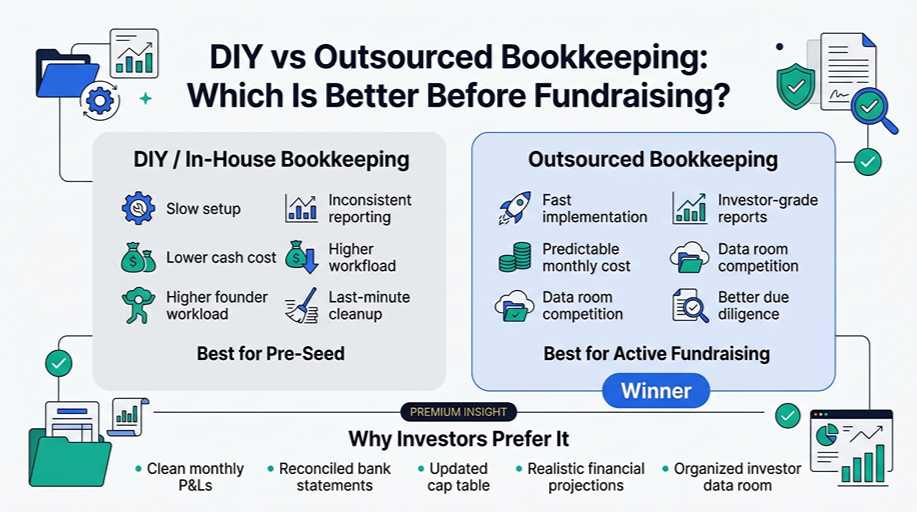
It depends on how close the book is, time and cost considerations, and whether a book is to be fixed inside or out. The table below summarizes the most common tradeoffs founders consider.
| Factor | In-House / DIY | Outsourced Bookkeeping |
| Setup speed | Slow, competes with other priorities | Fast, dedicated focus |
| Investor-grade reporting | Inconsistent | Standardized monthly reports |
| Cost at the early stage | Lower cash cost, higher time cost | Predictable monthly fee |
| Diligence readiness | Requires last-minute cleanup | Data room ready in advance |
| Best fit | Very early pre-seed stage | Startups actively fundraising |
Most of the founders who are getting ready to hold a raise tend to employ Bay Area virtual bookkeepers when they are within a couple of months of opening a data room because the time saved typically outweighs the expense.
Reasons Behind Bay Area Founders Choosing Virtual Bookkeeping
It is costly and time-consuming to maintain a full in-house finance team for an early-stage company, particularly when funds are needed immediately. The financial preparedness of startups at every stage is being raised.
Capital in the region is becoming more centralized and increasingly restricted to startups that can demonstrate capital efficiency rather than growth.
According to Crunchbase News’s recent report on venture funding trends, investors are making fewer, larger checks and looking more closely at companies before investing. The transition means that partnerships for outsourced accounting in San Francisco are no longer a good value for money, but a requirement to raise funds.
Final Thoughts
Investor-ready books aren’t created the week before the receipt of a term sheet; they’re built months in advance with a regular, disciplined approach to reconciliation, clean reporting, and the data room.
Diligence, which is the watchword of founders in early-stage outsourced bookkeeping services in San Francisco, is often embodied in an early investment.
San Francisco VCs Will Ask These 5 Questions About Your Books — Be Ready
Your financial records are under the microscope during due diligence. Get them investor-ready before you start your fundraising journey.

- All Posts
- Accounting And Finance
- All Blogs