
John Flores
Content Marketing Enthusiast
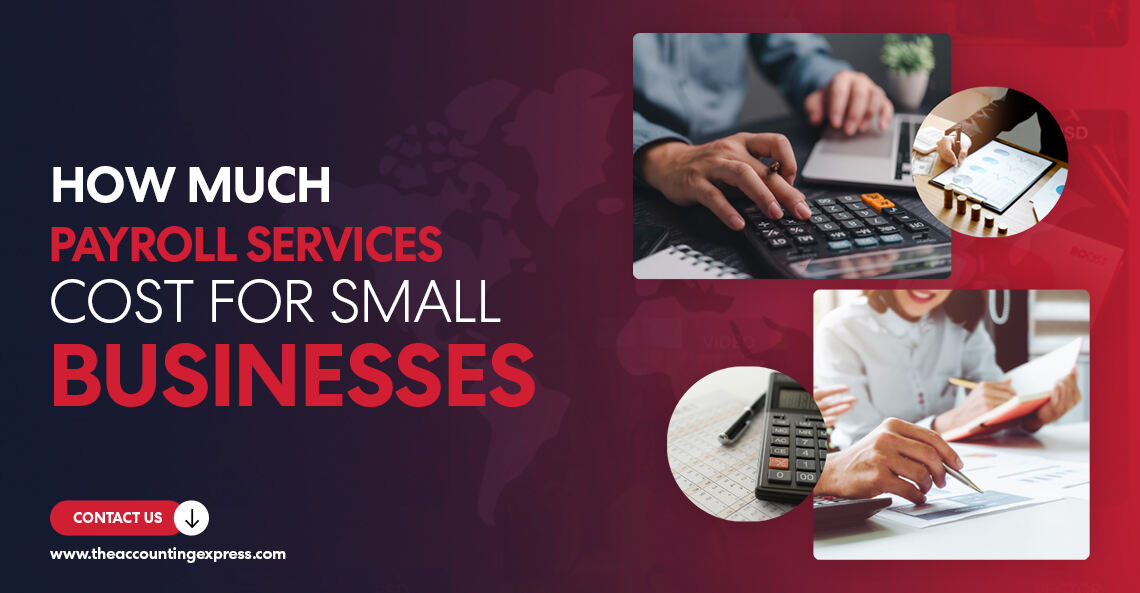
How Much Do Payroll Services Cost for Small Businesses?
Since cost-saving is a major concern for small businesses, therefor their operations often reflect wearing too many hats at once. Payroll in such scenarios usually reduces to one of those “we’ll figure it out later” tasks – until a missed tax filing, payroll error, or late employee payment suddenly surfaces to impact the cost equation of business.
That is the harsh reality many small businesses commonly experience; payroll costs are predictable, but payroll mistakes are not.
At this point, many small businesses, rather than getting stuck in an ongoing firefighting phase, eventually choose to outsource payroll services.
According to Forbes’s standard payroll costs, many small businesses in the U.S. pay a monthly base fee plus a per-employee charge for payroll processing, with pricing varying by business complexity and workforce size.
More Time. Less Stress. Cleaner Books.
You run your business. We’ll handle the numbers. From daily transactions to tax season — The Accounting Express keeps you compliant and profitable.
When Payroll Costs Get More Costly
On hearing ‘Payroll’, what instantly comes to our mind is the payment of salaries. In reality, it is beyond that. Payroll resides at the intersection of compliance, taxes, employee trust, accounting accuracy, and audit readiness.
How a payroll mistake can manifest in real-world environments: A missed filing can trigger penalties; incorrect deductions can annoy employees; and misclassified contractors can cause tax issues months later.
The IRS has made reporting requirements more stringent for payroll-related documentation, specifically around W-2 filing accuracy and payroll reporting deadlines. For 2025 filings, penalties for inaccurate or delayed payroll reporting can reach hundreds of dollars per form, depending on timing and severity.
This increasing scrutiny is prompting many businesses to opt for Payroll services in the USA instead of relying on spreadsheets and manual calculations.
Outsource payroll services: What Small Businesses Actually Pay?
Payroll pricing looks confusing at first because there is no universal flat rate. Costs depend on employee count, payroll frequency, tax complexity, benefits administration, and compliance requirements.
Many small businesses generally fall into three monthly pricing tiers:
Basic Payroll Setup: 1–10 Employees
Businesses with simple payroll structures and straightforward records typically spend $30–$100 per month, often plus a per-employee fee of $4–$10. Software such as Gusto, QuickBooks Payroll, Patriot Payroll, or Square Payroll typically falls into this category.
For instance, as per Reuter’s findings, Gusto’s entry-level payroll plans generally start around $49 per month plus $6 per employee, while QuickBooks Payroll pricing may begin around $50+ monthly with employee-based charges depending on features.
Growing Businesses: 10–50 Employees
When payroll becomes more layered – with overtime, deductions, benefits, contractors, or multiple departments – costs often move into the $100–$300 monthly range.
This phase often demands solid Employee payroll management services, automated tax filing, compliance tracking, and reporting dashboards.
Compliance-Heavy or Multi-State Businesses
Businesses operating across states, hiring remote teams, or facing audit challenges usually spend $300–$800+ monthly, especially when pairing payroll software with accounting oversight.
Here, the real cost is not money spent on payroll processing – it is saving money by avoiding mistakes.
As many business owners learn the hard way, cheap payroll often becomes expensive payroll later.
Stop Guessing. Start Growing With The Accounting Express.
Whether you need bookkeeping, tax preparation, or financial consulting — we’ve got you covered. Accurate, affordable, and built for businesses like yours.
The Hidden Costs Nobody Talks About
Payroll fees themselves are known, but mistakes are where costs quietly escalate.
Delayed tax deposits, inaccurate withholdings, worker misclassification, and erratic filings cause financial leakage that many businesses overlook.
On Reddit and other discussion forums, payroll-related complaints generally revolve around filing errors, delayed payments, and compliance confusion – particularly for growing businesses managing contractors or remote workers. Community discussions reveal that many businesses struggle more with payroll accuracy than payroll pricing itself.
At this point, Monthly payroll management services start becoming more meaningful. Instead of fixing issues retroactively, businesses create repeatable systems that prevent problems from happening in the first place.
What Smart Payroll Management Actually Looks Like?
The smart payroll would never feel dramatic; in fact, it would silently do its job behind the scenes.
Each pay cycle starts with gathering verified employee hours, salaries, overtime, reimbursements, and deductions. Payroll software then automatically calculates gross pay, tax withholding, insurance deductions, and net pay.
After payments are processed, payroll taxes are filed, reports are generated, and records are saved for compliance purposes.
The most effective systems integrate payroll and accounting rather than handling them separately. That is where Bookkeeping services truly demonstrate their relevance and significance, as payroll accuracy directly impacts financial statements, budgeting, and tax reporting.
Businesses using integrated systems usually deploy payroll tools such as Gusto, QuickBooks Payroll, ADP Workforce Now, Rippling, or Workday, and combine them with accounting support.
This is where how small accounting firms use AI becomes more pertinent to daily operations. AI-powered payroll systems now enable businesses to validate payroll in real time, monitor tax compliance, automate reconciliations, and spot costly errors before payroll processing.
This transition aligns with broader AI trends in accounting in 2026, where financial systems continue to predict anomalies before they become high-cost mistakes. Reuters recently reported growing investment in AI-driven financial operations and automation across financial sectors, reinforcing how rapidly payroll technology is evolving.
Your Financial Success Starts With The Right Partner.
The Accounting Express provides expert accounting services tailored to your unique needs. No surprises. No hidden fees. Just clarity and confidence.
Manual Payroll vs Software vs Outsourcing: What Actually Works?
All payroll systems are not built in the same way – they differ as the structure of businesses varies: What is best for a five-person startup may not work for a growing business managing multiple employees, tax obligations, and compliance requirements. The core concern is not what costs less today; in fact, it is about
What continues working without creating costly errors tomorrow? Here we have three options to choose from:
Manual Payroll
Spreadsheets seem affordable initially. But manual payroll gets risky fast once employee numbers increase or tax rules become complex.
A missed filing or formula error can quickly erase any short-term savings.
Payroll Software
Platforms such as Gusto, QuickBooks Payroll, OnPay, and ADP automate payroll taxes, reporting, and direct deposits. For smaller teams, this usually balances affordability with efficiency.
However, software is again dependent on clean inputs.
Outsourcing Option: Payroll + Accounting Oversight
This is the most widely adopted option for growing businesses.
Integrating payroll with Payroll management services, accounting review, and compliance oversight minimizes gaps between payroll records, tax filings, and audits.
Rather than treating it as an expense, professional oversight turns it into a stability layer for overall business operations.
This is one of the prime reasons why many startups and service-based companies slowly shift toward Bookkeeping services for small businesses, outsourced bookkeeping services, and online bookkeeping services as their operations become more complex in nature.
Payroll Costs Are Predictable; Payroll Mistakes Are Not
Smart businesses would always avoid the cheapest payroll options because they calculate in advance the costs they might have to pay in the long run.
They choose to rely on the most reliable options: maintaining clean financial records year-round; aligning payroll with taxes and accounting in advance; and proactively building systems rather than reacting to problems.
This is especially true for bookkeeping services for startups, where rapid hiring can outpace financial systems surprisingly quickly.
Within the broader Best Accounting Firm In USA industry, firms mainly integrate payroll, bookkeeping, tax preparation, and compliance into one process because fragmented workflows tend to create costly blind spots.
Final Word
The real takeaway from this discussion: Never treat payroll pricing in isolation.
The cheapest payroll systems may save you costs upfront, but an erratic setup can silently prove more costly in the long run. It can cost you in the form of penalties, employee frustration, and operational confusion.
For businesses aiming to gain financial clarity, seek the services of firms like The Accounting Express, which gives them solutions with certainty. Their approach of combining payroll, accounting, audit support, and compliance paints a realistic picture in which payroll works best in integrated environments.
Let’s Talk Numbers.
Whether you’re a startup or an established brand — The Accounting Express helps you save more, stress less, and sleep better.
FAQ'S
Payroll pricing usually falls between $30 and $150/month, with per-employee fees. Pricing ranges can vary due to factors such as business complexity, filing frequency, and compliance needs.
Cost for many payroll systems = $40–$200/month + $4–$12/employee. Variable factors include: features and automation level.
The four major types of payroll systems are manual payroll, payroll software, outsourced payroll, and fully managed payroll services.
Payroll labor costs generally include wages, payroll taxes, benefits, compliance costs, software fees, and internal payroll administration time.

About The Author
A finance and accounting professional with a strong passion for helping businesses grow, John Smith specializes in delivering clear financial insights and strategic accounting solutions. With extensive experience in bookkeeping, tax planning, financial reporting, and business advisory, he is dedicated to simplifying complex financial processes and helping companies make smarter financial decisions with confidence.
Let's Discuss
Recent Blog
- All Posts
- Accounting And Finance
- All Blogs



Related Tags
- bookkeeping and tax services
- bookkeeping services
- CFO Accounting Services
- CFO Services
- Fractional CFO Services
- online accounting and bookkeeping services