
John Flores
Content Marketing Enthusiast
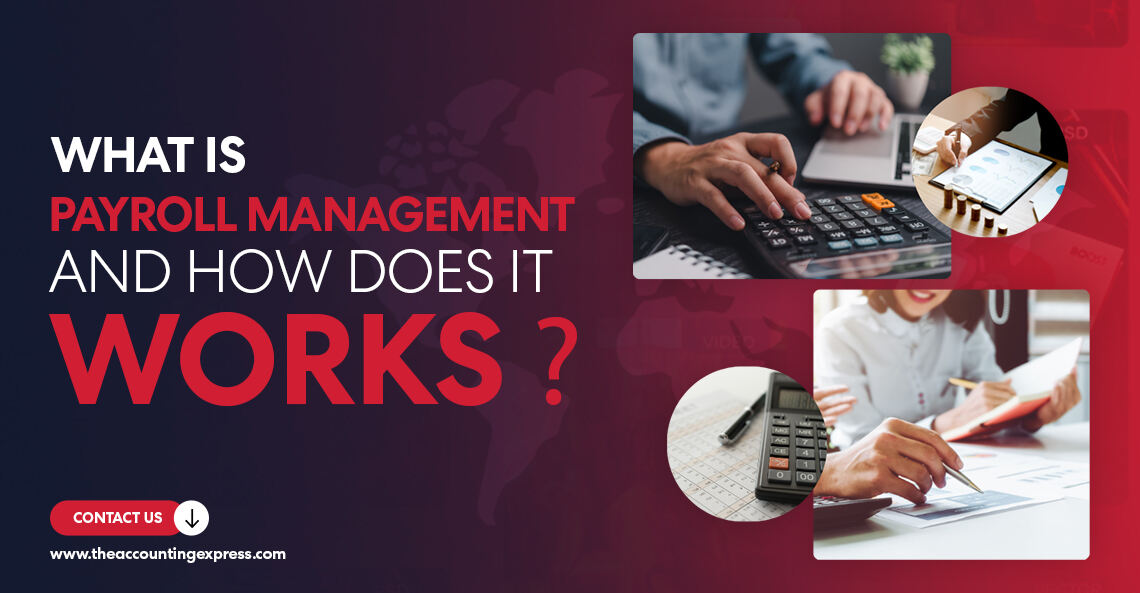
What Is Payroll Management and How Does It Work?
Imagine a business missing a tax deadline, delaying salary releases, which in turn triggers employee concerns and sudden trust erosion. Such scenarios have become very common due to the rise in compliance crackdowns, as validated in reports published by Reuters. At this point, a business genuinely feels the need for payroll management services – not just as a function, but as a safeguard. Firms like The Accounting Express silently take charge and stabilize this chaos, turning payroll into a system business can actually bank on.More Time. Less Stress. Cleaner Books.
You run your business. We’ll handle the numbers. From daily transactions to tax season — The Accounting Express keeps you compliant and profitable.
Get Your Free ConsultationWhy Payroll Clarity Builds Financial Confidence in Today’s Diverse Job Markets?
It is a very common misconception prevalent in work environments that payroll is a back-office routine chore. In reality, it resides at the center of compliance, employee trust, and financial accuracy. When salaries are delayed or deducted for the wrong reasons, it raises concerns. Demotivation and frustration among employees also pave the way for legal and audit risks. The overall pressure in work-related environments has already multiplied due to the global expansion of remote work options, which has made payroll compliance more complicated across varied jurisdictions. Simultaneously, stats highlighted by LinkedIn show a constant surge in the adoption of payroll automation software, largely because manual systems are crumbling under these pressures. This is the transition: Payroll, from an operational tool to an opportunity for strategic advantage. Businesses that still have a casual attitude towards it may pay for it later through penalties, demotivated employees, or failed audits.How Payroll Management Actually Works in Real Business Routine?
Payroll isn’t a single one-dimensional task – you can envision it like a chain reaction where one minor error can trigger big financial challenges – therefore, the key is to remain cautious at all steps:Step 1: Data Collection and Validation
Every payroll cycle starts with the collection of employee data – hours worked, salaries, benefits, and tax details. This is the breeding ground for most payroll errors. A missing timesheet or inaccurate classification can distort the overall process. Tools like QuickBooks or Gusto help automate this input stage, while firms like The Accounting Express ensure data is verified before it is entered into the system.Step 2: Gross-to-Net Calculations
This is the core stage of any payroll processing system because salaries are calculated, deductions are applied, and taxes are withheld. This is where compliance complexity is addressed. From income tax to benefits deductions, everything must be in sync with local laws. AI-driven tools, such as ADP Workforce Now and Rippling, reduce calculation risks by automatically applying real-time tax updates.Step 3: Payment Processing
Once calculations are done, payments are released through bank transfers or other methods. Delays here would directly impact employee trust. Efficient employee payroll management ensures payments are timely and accurate – no hiccups.Step 4: Tax Filing and Compliance
Another potential Fault line where many businesses may struggle. Payroll tax filing has to meet strict deadlines and regulatory requirements. According to insights discussed in Forbes, small businesses often incur penalties due to mismanagement during tax preparation. This step is where professional supervision becomes crucial.Step 5: Reporting and Audit Trail
Every payroll cycle ends with documentation. A proper payroll reporting system provides structured, audit-ready, and accessible records. This is exactly where audit support services from firms like The Accounting Express become relevant and worthy – turning messy records into organized, compliant documentation. Payroll gives best results when it’s approached as a system, not a single task. The moment one step weakens, the entire chain falls apart.Stop Guessing. Start Growing With The Accounting Express.
Whether you need bookkeeping, tax preparation, or financial consulting — we’ve got you covered. Accurate, affordable, and built for businesses like yours.
Talk to an Accounting Expert TodayTypes of Payrolls: With Takeaways and Trade-Offs
The thought process behind picking a method for the management of payroll is the point where businesses silently accept the shift and embrace the strategic approach:Manual Payroll
Manual systems are dependent on spreadsheets. They may apparently save costs initially, but quickly become error-prone. One missed formula or an outdated tax rate can create compliance issues that far outweigh the savings.Software-Based Payroll
Modern businesses are shifting toward small-business payroll solutions provided by software such as Xero or Workday. These systems automate calculations, enable compliance updates, and offer real-time visibility. Their efficiency is dependent on proper configuration.Outsourced Payroll
With payroll outsourcing services, businesses hand over the responsibility to experts. This does reduce workload and effectively manages risk, but it involves additional hiring costs and requires trust. It needs to be done right to eliminate the stress of compliance entirely and make the most of this method. The most cost-effective option often may turn out to be the most expensive in the long run. Payroll doesn’t allow shortcuts to survive.Smart Payroll System in a Single Glance
Here’s what Smart Payroll System actually looks like in practice:- Integration of overall workflow: Incorporates data, compliance, accounting, and reporting in a single workflow.
- AI-automated live calculations: Tools like QuickBooks, ADP, Gusto, Rippling, and Workday manage salaries and deductions instantly.
- Built-in compliance mechanism: Maintains the alignment of payroll compliance with changing tax laws.
- Automated error identification: Detects anomalies in advance, minimizing payroll errors.
- End-to-end workflow: From data input → gross-to-net calculation → salary disbursement → payroll tax filing → reporting – everything functions in a synced, repetitive cycle.
- Structured, audit-ready records: A clean payroll reporting system enables smooth audits and avoids last-minute pain points.
- System integration: Aligns with HR and accounting tools.
- System Supporting Growth: Adapts to expanding employee payroll management needs.
- Under Expert Supervision: Backed by firms like The Accounting Express for accuracy and audit readiness.
How Smart Businesses Fix Failing Payrolls?
Payroll problems don’t directly land from space; they originate from predictable patterns – let’s have a close look at these failures and their fixtures:- Failure: Scattered, misclassified employee data would pose compliance risks.
- Fixture: The fix is straightforward: organized categories for data collection and classification policies supported by expert review.
- Failure: Delay in filings may trigger penalties.
- Fixture: Automated reminders and systems minimize this risk.
- Failure: Poor documentation creates audit stress.
- Fixture: Keeping structured and audit-ready records fixes it.
- Failure: Incoherent systems cause inconsistencies.
- Fixture: Integration between payroll, HR, and accounting tools ensures data accuracy.
Conclusion: Payroll Clarity Is the Foundation of Business Control
Payroll, on the surface, might seem limited to paying your employees, but in practicality, it’s about managing and running an overall system. The core responsibility lies in remaining compliant and controlling avoidable costs. Businesses that opt for professional payroll management services enjoy gains that extend beyond efficiency, ultimately achieving clarity. Partnering with firms like The Accounting Express makes payroll a competitive edge, not a trade-off.Let’s Talk Numbers.
Whether you’re a startup or an established brand — The Accounting Express helps you save more, stress less, and sleep better.
Schedule Your Free Call →FAQ'S
It’s a process that calculates salaries, deducts taxes, and pays employees accurately while maintaining an audit-ready, compliant, documented record.
The four types of Payroll Systems include: Manual, software-based, outsourced, and hybrid systems - each differs in terms of control, cost, and efficiency.
The top three skills required for a payroll position include: accuracy, knowledge of compliance, and attention to detail. In the absence of these skills, errors would quickly pile up.
It can serve as an assistant, but a full replacement is currently not possible. Because real payroll requires compliance systems, safe, cautious data handling, and expert validation.
The most effective tools for payroll management include QuickBooks Payroll, ADP, Gusto, Rippling, Workday, and Xero – usually paired with integrated accounting systems.

About The Author
A finance and accounting professional with a strong passion for helping businesses grow, John Smith specializes in delivering clear financial insights and strategic accounting solutions. With extensive experience in bookkeeping, tax planning, financial reporting, and business advisory, he is dedicated to simplifying complex financial processes and helping companies make smarter financial decisions with confidence.
Let's Discuss
Recent Blog
- All Posts
- Accounting And Finance
- All Blogs

Related Tags
- bookkeeping and tax services
- bookkeeping services
- CFO Accounting Services
- CFO Services
- Fractional CFO Services
- online accounting and bookkeeping services